
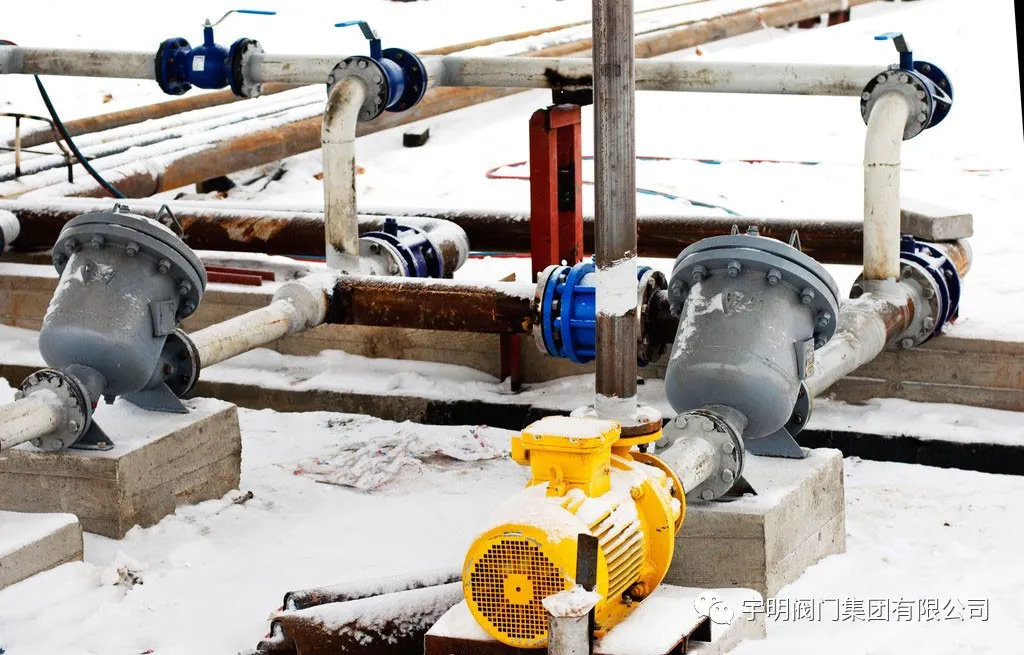

In northern regions, where temperatures are low in winter, many chemical, petroleum, and refining enterprises need to implement insulation measures to protect valves. Similarly, heating valves in residential buildings also require proper winter protection.
The main anti-freezing measures for valves involve installing the valves indoors without compromising their normal and safe operation. Alternatively, according to the size of the valve, insulation cotton can be cut to fit using a utility knife, and binding wires can be prepared using pliers. When wrapping the insulation cotton, tear a small opening to fit around the valve handle for better coverage of the valve body. After wrapping, secure the insulation cotton firmly with wire.

If a valve is found frozen and unable to operate normally, do not use a wrench or other heavy objects to strike the valve. The correct method is to close the valve and thaw it using steam or hot water before reopening it.

After shutting down or repairing equipment, all residual water must be drained to prevent freezing and cracking. Pressure vessels that may contain water should be regularly drained, and the drain valves should be properly insulated. Steam pipelines should be checked for proper drainage, and both the drain valves and pipelines should be insulated. In chemical systems, drip pipelines need insulation. Safety valves on boilers, pressure vessels, and pressure pipelines must be insulated to prevent freezing, which could lead to malfunction. During hydrostatic testing, proper insulation should be ensured, especially for narrow pipelines prone to freezing. For pressure vessels that are easily frozen, liquid level indicators or steam tracing lines should be installed on pressure pipelines, and the steam flow should be kept unblocked.

For valves that are not used for extended periods, the medium in the pipelines should be completely drained to prevent freezing in both the pipelines and the valves. Valves in long-term storage should be regularly inspected, debris should be removed, and anti-corrosion oil should be applied to the machined surfaces.
Anti-freezing measures for valves are critical. A moment of negligence or oversight could result in irreparable consequences. It is crucial to approach winter valve maintenance with diligence and care to ensure safe and reliable operation.
相关文章

"Fifty Years of Excellence, Creating a Brighter Future Together": Yuming Valve Group's 50th Anniversary Celebration and 2024 Annual Sales Review Conclude Successfully

[New Year's Day] A New Year Dawns, Blessings Begin

2024 International Conference on Nuclear and Radiation Safety Highlights Advances in Nuclear Power Valve Technology

Secrets to Valve Sealing Surface Restoration: Grinding Techniques and Abrasive Selection


Friendly Links


Subscribe to our mailing list

