


Before installing a valve, verify its model and specifications according to the design requirements. Confirm the correct installation direction by referencing the design drawings, valve markings, and the flow direction of the pipeline medium. For valves to be installed, ensure that the packing is adequate, the gasket material is correct, and the gland bolts have sufficient clearance. Remove any temporary fixtures within the valve. For valves installed on horizontal pipelines, the valve stem should be positioned within the upper half of the horizontal plane.
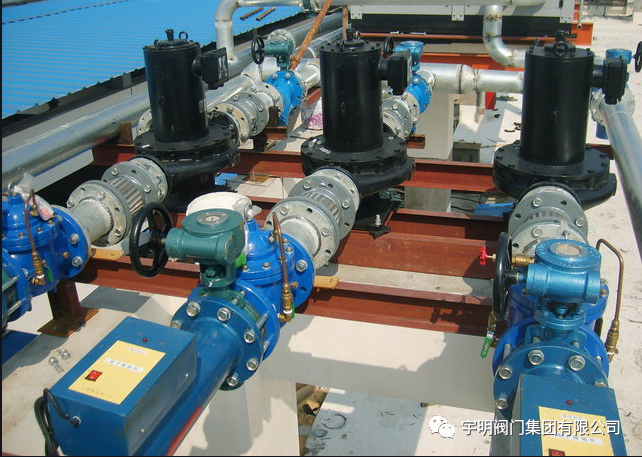
The handwheels of valves on both sides of a safety valve should be easily operable; they may be installed inclined upward or horizontally. Valves with flange or threaded connections should be installed in the closed position. For welded valves, ensure they are also closed during installation. When using socket welding connections, maintain a gap of 0.5–1.0 mm at the socket end.
For butt-welded valves connected to pipelines, use tungsten arc welding for root passes. If the valve is welded onto pipelines requiring overall heat treatment, the valve should be welded after the pipe section has undergone overall heat treatment. Subsequently, perform localized heat treatment on the weld seam.

The angle between the extended drive rod and the valve stem axis should not exceed 30 degrees. The joint must be secure, and rotation should be smooth. For valves on pipelines with thermal displacement, leave sufficient clearance around the drive rod to allow for free expansion and contraction.
After installation, the operating mechanisms and transmission devices should be tested and adjusted to ensure reliable operation, smooth activation, and accurate indication. During the installation of cast iron, silicon iron, or enamel-lined valves, avoid excessive force or uneven stress to prevent valve body damage. Valves such as double-disc gate valves, straight-through lift check valves, pressure-reducing valves, and steam traps should be installed on horizontal pipelines.

Safety valves must be installed at the end of a vertical pipeline, with the inlet and outlet pipes securely fixed to ensure the safety valve body remains vertical. Single-disc gate valves and swing check valves should ideally be installed on horizontal pipelines but can also be installed on vertical or inclined pipelines.
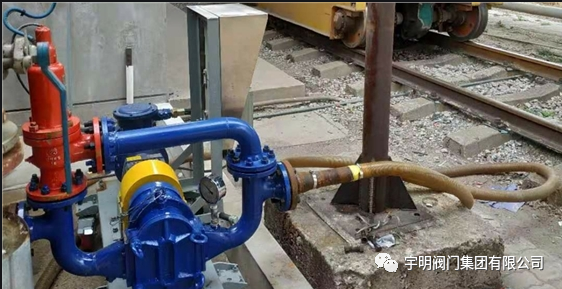
When transporting and storing valves, protect the handwheel from impact or damage. During hoisting, it is strictly prohibited to attach slings to the handwheel or handle. For large valves, install load-bearing supports in advance to ensure the valve's weight is not borne by the equipment or pipeline.
Safety valves requiring final adjustment on the pipeline system should be calibrated promptly when the system is operational. Calibration must meet the requirements specified in SH/T 3517-2001 (Petrochemical Steel Piping Engineering Construction Specifications).
During calibration, the user and relevant departments must supervise and confirm the process on-site. Once completed, the safety valve should be sealed, and the final calibration record should be promptly documented.
相关文章

"Fifty Years of Excellence, Creating a Brighter Future Together": Yuming Valve Group's 50th Anniversary Celebration and 2024 Annual Sales Review Conclude Successfully

[New Year's Day] A New Year Dawns, Blessings Begin

2024 International Conference on Nuclear and Radiation Safety Highlights Advances in Nuclear Power Valve Technology

Secrets to Valve Sealing Surface Restoration: Grinding Techniques and Abrasive Selection


Friendly Links


Subscribe to our mailing list

