
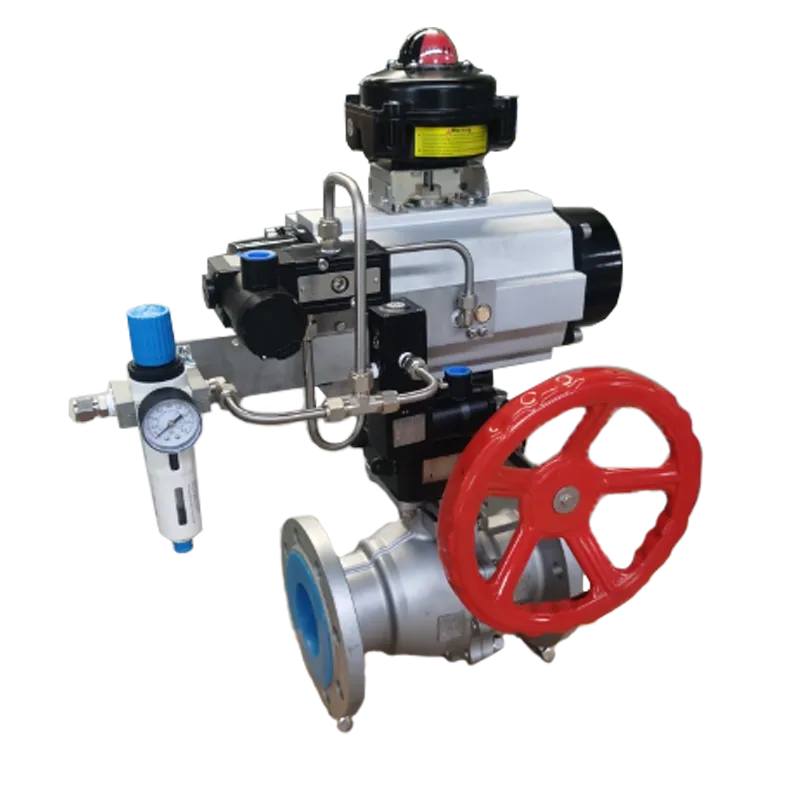


I. Causes of Actuator Failures
1.Air Supply Pressure: Check whether the air supply pressure at the inlet and outlet of the air filter regulator meets the rated value. Adjust the pressure or replace the air filter regulator as needed.
2.Solenoid Valve Blockage: Inspect the solenoid valve for blockages and ensure normal operation of the switching mechanism. Clear any blockages or replace the solenoid valve as necessary.
3.Pressure and Throttle: Verify that the air pressure entering the actuator meets the rated value and check the throttle valve for blockages.
4.Seal Friction and Leakage: Inspect for excessive friction in the valve seals or any air leakage from the sealing ring.

II. Actuator Moves, But Torque is Insufficient
Check the adjustment bolts at both ends of the cylinder. Adjust them according to the closing condition and lock them in the correct position.
III. Pneumatic Ball Valve Operates But Moves Slowly
Inspect the following:
1.Speed Controller Adjustment: Before the actuator, check whether the speed controller requires adjustment. Over time, changes in the process pipeline and valve components may necessitate speed controller adjustments.
2.Cylinder Leakage: Inspect the cylinder for air leaks. A damaged O-ring inside the cylinder can slow valve operation.
3.Spring Integrity: Ensure the spring is in good condition. A weakened spring can reduce thrust.
4.Locking Valve and Exhaust: Check whether the cylinder outlet locking valve is responsive and whether the cylinder exhaust operates normally.

IV. Actuator Operates Normally, But Valve Fails to Function
Possible causes include:
1.Stuck Valve Core or Seat: The valve core or seat may be stuck, or the pipeline may be blocked.
2.Connection Wear: The connection between the actuator and valve core may be worn or detached.
V. Actuator Operates Normally, But Valve Fails to Fully Open or Close
Potential reasons:
1.There are foreign objects in the pipeline to block the valve;
2.In the pressure difference is too large, the rigidity of the actuator is small, the valve is not closed tightly;
3.The valve body itself fails because: if it is a ball valve, the sealing surface is generally damaged or stuffing box leakage; if it is a fluorine lined butterfly valve or rubber lined butterfly valve, fluorine lined butterfly valve or rubber lined butterfly valve is generally deformed; if it is a diaphragm valve, the rubber diaphragm is generally damaged; if it is a gate valve if the sealing surface is worn out or the drive part is stuck, worn out, or rusted, it can be replaced.
相关文章

"Fifty Years of Excellence, Creating a Brighter Future Together": Yuming Valve Group's 50th Anniversary Celebration and 2024 Annual Sales Review Conclude Successfully

[New Year's Day] A New Year Dawns, Blessings Begin

2024 International Conference on Nuclear and Radiation Safety Highlights Advances in Nuclear Power Valve Technology

Secrets to Valve Sealing Surface Restoration: Grinding Techniques and Abrasive Selection


Friendly Links


Subscribe to our mailing list

