
行业新闻
Yuming Valve Knowledge Hub | Classification and Application of Valve Sealing Materials
2022.12.30
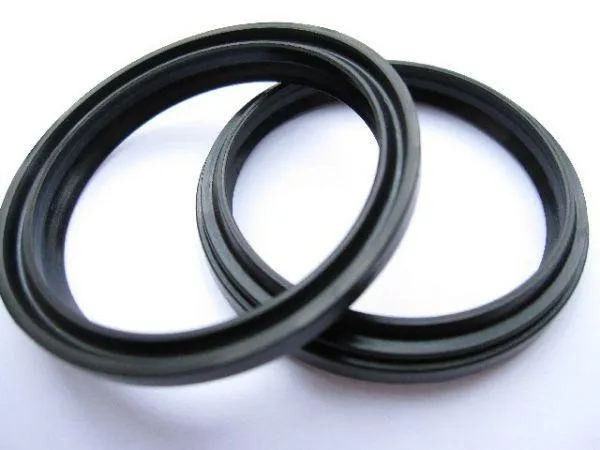
Valve sealing is a critical component of any valve, designed to prevent leakage. The valve seat, also known as the sealing ring, is the part that directly contacts the medium in the pipeline and blocks its flow. Given the diverse range of media in pipelines—liquids, gases, oils, and corrosive substances—different valves require seals suited to various applications to ensure compatibility with the medium.

Valve sealing materials can be broadly categorized into metallic and non-metallic materials. Non-metallic seals are typically used for pipelines operating under normal temperature and pressure, while metallic seals are more versatile, suitable for high-temperature and high-pressure environments.
Synthetic Rubber
Synthetic rubber offers better oil resistance, temperature tolerance, and corrosion resistance compared to natural rubber. The operational temperature for synthetic rubber is typically t≤150∘Ct \leq 150^\circ \text{C}t≤150∘C, while for natural rubber it is t≤60∘Ct \leq 60^\circ \text{C}t≤60∘C. Synthetic rubber is used in valves with nominal pressure PN≤1MPa\text{PN} \leq 1 \text{MPa}PN≤1MPa, such as globe valves, gate valves, diaphragm valves, butterfly valves, check valves, and pinch valves.
Nylon
Nylon has a low friction coefficient and good corrosion resistance, making it ideal for applications at t≤90∘Ct \leq 90^\circ \text{C}t≤90∘C and PN≤32MPa\text{PN} \leq 32 \text{MPa}PN≤32MPa, commonly used in ball valves and globe valves.
Polytetrafluoroethylene (PTFE)
PTFE is widely used in applications with temperatures t≤232∘Ct \leq 232^\circ \text{C}t≤232∘C and nominal pressures PN≤6.4MPa\text{PN} \leq 6.4 \text{MPa}PN≤6.4MPa. It is suitable for globe valves, gate valves, and ball valves.
Cast Iron
Cast iron is used in applications with temperatures t≤100∘Ct \leq 100^\circ \text{C}t≤100∘C and pressures PN≤1.6MPa\text{PN} \leq 1.6 \text{MPa}PN≤1.6MPa, such as gas and oil gate valves, globe valves, and plug valves.
Babbitt Alloy
Babbitt alloy is suitable for ammonia globe valves operating at t=−70∘Ct = -70^\circ \text{C}t=−70∘C to 150∘C150^\circ \text{C}150∘C and PN≤2.5MPa\text{PN} \leq 2.5 \text{MPa}PN≤2.5MPa.

Copper Alloy
Common materials include 6-6-3 tin bronze and 58-2-2 manganese brass, known for their excellent wear resistance. Copper alloy is suitable for water and steam applications at t≤200∘Ct \leq 200^\circ \text{C}t≤200∘C and PN≤1.6MPa\text{PN} \leq 1.6 \text{MPa}PN≤1.6MPa, typically used in gate valves, globe valves, check valves, and plug valves.
Chrome Stainless Steel
Common grades include 2Cr13 and 3Cr13, which are heat-treated for good corrosion resistance. These are used for water, steam, and petroleum media at t≤450∘Ct \leq 450^\circ \text{C}t≤450∘C and PN≤32MPa\text{PN} \leq 32 \text{MPa}PN≤32MPa.
Chrome-Nickel-Titanium Stainless Steel
The common grade is 1Cr18Ni9Ti, with excellent corrosion, erosion, and heat resistance. It is suitable for steam and similar media at t≤600∘Ct \leq 600^\circ \text{C}t≤600∘C and PN≤6.4MPa\text{PN} \leq 6.4 \text{MPa}PN≤6.4MPa, often used in globe valves and ball valves.
Nitrided Steel
The typical grade is 38CrMoAlA, which undergoes carburizing treatment for enhanced corrosion and wear resistance. It is used in power station gate valves operating at t≤540∘Ct \leq 540^\circ \text{C}t≤540∘C and PN≤10MPa\text{PN} \leq 10 \text{MPa}PN≤10MPa.
Boronizing
Boronizing involves machining the valve body or disc material to create a sealing surface, followed by boronizing surface treatment for excellent wear resistance. It is used in power station drain valves.

Key Maintenance Considerations:
1.Perform sealing performance tests to ensure functionality.
2.Inspect the valve’s sealing surface for wear and repair or replace as necessary.
相关文章

"Fifty Years of Excellence, Creating a Brighter Future Together": Yuming Valve Group's 50th Anniversary Celebration and 2024 Annual Sales Review Conclude Successfully

[New Year's Day] A New Year Dawns, Blessings Begin

2024 International Conference on Nuclear and Radiation Safety Highlights Advances in Nuclear Power Valve Technology

Secrets to Valve Sealing Surface Restoration: Grinding Techniques and Abrasive Selection


Friendly Links


Subscribe to our mailing list

