


When selecting a wafer butterfly valve, terms like hard-backed, soft-backed, and lined seats often come up. The primary distinction among these lies in the method of installation for the sealing material and the structural design of the valve body. This difference is reflected in both the valve body's construction and the shape of the valve seat.
To illustrate, let’s use a DN100 valve body as an example and examine the differences visually.

Understanding the Valve Seat
What is a Valve Seat?
A valve seat is a detachable component within the valve, designed to support the valve disc in its fully closed position and form a sealing ring. Typically, the diameter of the valve seat determines the maximum flow diameter of the valve.
Butterfly valve seats are made from a wide range of materials, including various rubbers, plastics, and metals. Examples include:
Rubber and Plastics: EPDM, NBR, NR, PTFE, PEEK, PFA
Metals and Alloys: SS315, Stellite
Specialty Materials: FPM, SI, CR, natural rubber, Hypalon, white EPDM, neoprene, abrasion-resistant nitrile, silicone, food-grade rubber
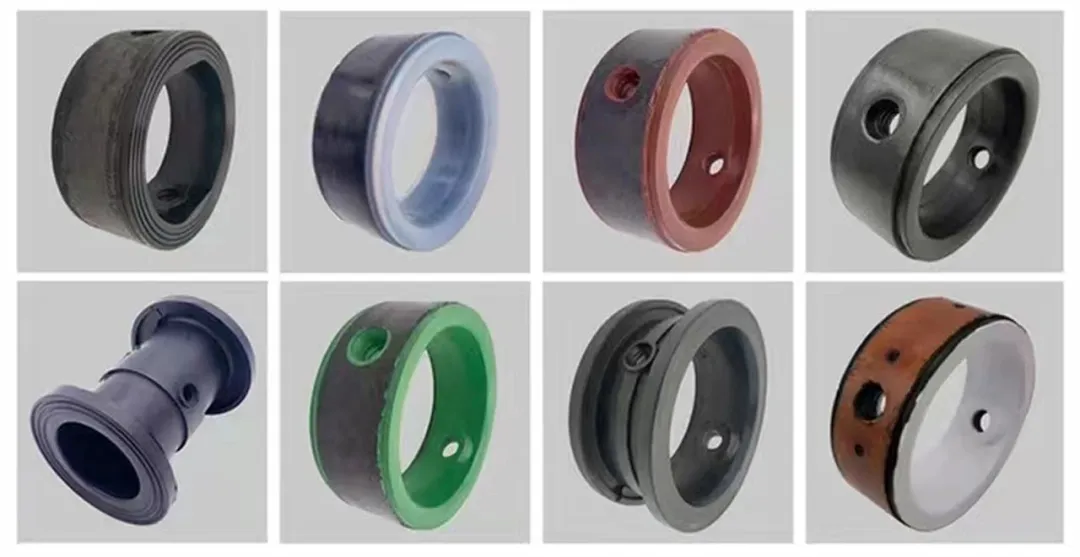
Hard-Backed Valve Seat
Material: Composed of rubber encapsulating a hard backing material.
Installation: The valve seat is pressed into the valve body using specialized assembly platforms and machinery.
Variants: Includes standard and waterline types.

Soft-Backed Valve Seat
Material: Entirely made of rubber, providing high elasticity. Also known as a backless valve seat.
Installation: Easier to replace or disassemble during maintenance due to its flexible material and simpler installation process.

Lined Butterfly Valve
Material: A rubber liner is integrally molded onto the valve body, forming a unified structure.
Advantages: Compared to traditional butterfly valves, lined butterfly valves offer better resistance to high temperatures, smoother operation, frictionless opening and closing, excellent sealing performance, and longer service life.
Applications: Widely used in firefighting, building systems, food processing, paper manufacturing, textiles, medical facilities, industrial water systems, urban wastewater, gas distribution, and chemical, metallurgical, power generation, and environmental protection projects. Suitable for pipelines transporting various corrosive and non-corrosive fluid media, regulating or cutting off the flow of media.

Finished Butterfly Valve Showcase
In field installations, selecting the appropriate flange—either flat welding or butterfly valve flange—depends on the valve body structure:
1.Size Compatibility: Flat welding flanges and butterfly valve flanges have identical connection dimensions, but their inner diameters differ.
2.Sealing: Butterfly valve flanges offer a better fit with the rubber seat, ensuring a more secure installation.
Below are images showcasing the appearance of different valve seats installed on butterfly valve bodies. (All images are product shots.)

相关文章

"Fifty Years of Excellence, Creating a Brighter Future Together": Yuming Valve Group's 50th Anniversary Celebration and 2024 Annual Sales Review Conclude Successfully

[New Year's Day] A New Year Dawns, Blessings Begin

2024 International Conference on Nuclear and Radiation Safety Highlights Advances in Nuclear Power Valve Technology

Secrets to Valve Sealing Surface Restoration: Grinding Techniques and Abrasive Selection


Friendly Links


Subscribe to our mailing list

