
行业新闻
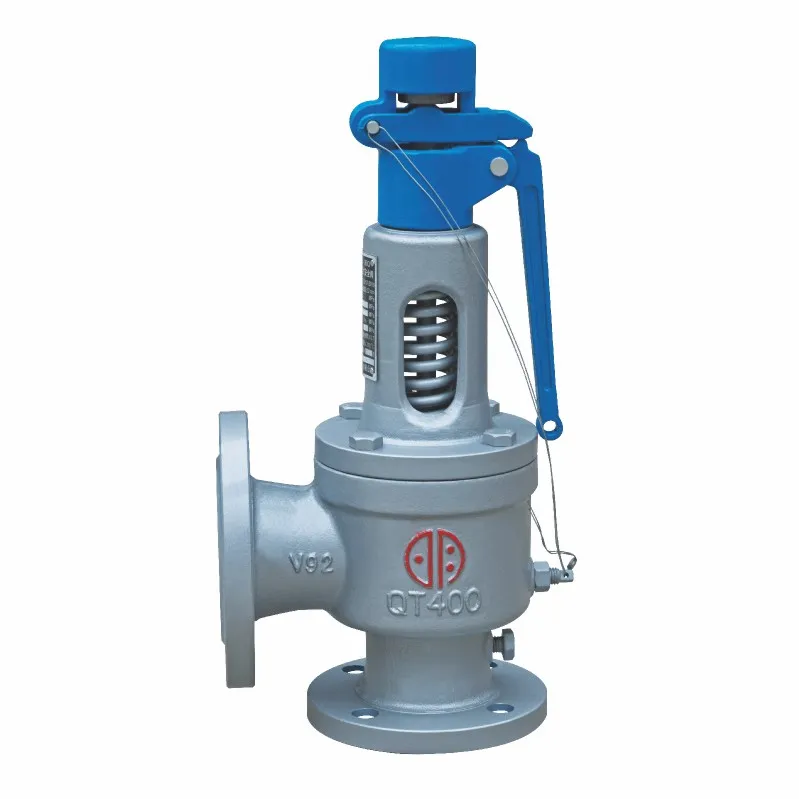
Yuming Valve Knowledge Hub | Operational Guidelines for Adjusting Spring-Loaded Safety Valves
2023.06.22

Safety Valve Adjustment Procedures
1. Adjustment of Set Pressure
(1) Factory Adjustment
Each safety valve should be adjusted to the specified set pressure before leaving the factory. If the user specifies a working pressure range for the spring, the valve is typically adjusted to the lower limit of the range.
(2) On-Site Recalibration
Before installing the safety valve on the protected equipment, users must conduct on-site recalibration to ensure the set pressure complies with operational requirements.
(3) Adjustment via Spring Compression
Within the spring’s specified working pressure range, the set pressure can be adjusted by rotating the adjustment screw to change the spring’s compression.
(4) Precautions During Adjustment
Before rotating the adjustment screw, reduce the valve inlet pressure to below 90% of the set pressure to prevent the valve disc from rotating, which could damage the sealing surface.
(5) Consideration of Medium Conditions
To ensure accurate set pressure, adjust the valve under medium conditions that closely resemble actual operating conditions (e.g., medium type, temperature). Note that changes in medium type or phase (e.g., from liquid to gas) may affect the set pressure. High operating temperatures often result in a slight decrease in set pressure, so adjustments made at ambient temperature should set a slightly higher set pressure value than required for high-temperature operations. The specific adjustment should follow the manufacturer’s recommendations.
(6) Adjustment for Fixed Backpressure
For safety valves designed to operate under constant additional backpressure, the set pressure during testing (with atmospheric backpressure) should equal the required set pressure minus the additional backpressure.

2. Adjustment of Blowdown and Reseating Pressure
(1) Testing Full Lift Operation
Blowdown and reseating pressure adjustments require full lift operation testing, which can only be conducted on large-capacity test equipment or after the safety valve is installed on the protected equipment. Adjustment methods vary depending on valve design.
(2) Single Adjustment Ring Design
For valves with a backpressure ring or seat adjustment ring, rotate the adjustment ring to modify blowdown and reseating pressure. Turning the ring counterclockwise raises its position, lowering both blowdown and reseating pressures. Conversely, turning it clockwise lowers the ring, raising these pressures. Adjustments should be small (a few teeth per adjustment). After each adjustment, secure the fixing screw in place, ensuring it fits into the groove between two teeth without applying radial pressure. To avoid accidents, reduce the inlet pressure to below 90% of the set pressure before adjusting the ring.
(3) Dual Adjustment Ring Design
For valves with upper and lower adjustment rings, the process is more complex. The lower ring adjusts the pressure buildup in the chamber between the valve disc and the ring during initial opening. Raising the lower ring increases pressure buildup, promoting a quicker full lift and reducing blowdown pressure. However, the lower ring should not be raised too close to the valve disc, as this may cause premature opening and lead to valve chattering.
The upper ring adjusts the flow medium’s reflection angle below the disc, affecting reseating pressure. Raising the upper ring reduces the reflection angle, decreasing fluid force and increasing reseating pressure. Conversely, lowering the upper ring reduces reseating pressure. While the upper ring adjustment also affects blowdown pressure, its impact is less significant than on reseating pressure.
3. Sealing with Lead
After adjustments are completed, the safety valve should be sealed with lead to prevent unauthorized changes. Before dismantling the valve for maintenance, note the positions of the adjustment screw and rings to facilitate post-repair recalibration. Once re-adjusted, reseal the valve.
相关文章

"Fifty Years of Excellence, Creating a Brighter Future Together": Yuming Valve Group's 50th Anniversary Celebration and 2024 Annual Sales Review Conclude Successfully

[New Year's Day] A New Year Dawns, Blessings Begin

2024 International Conference on Nuclear and Radiation Safety Highlights Advances in Nuclear Power Valve Technology

Secrets to Valve Sealing Surface Restoration: Grinding Techniques and Abrasive Selection


Friendly Links


Subscribe to our mailing list

